
The Cost of Skepticism
Rosemary's BabyThis flow traces the tension between rejecting supernatural claims and recognizing that others’ beliefs can still organize real acts of harm.
increasing Bearing strength in each event
 decreasing
Bearing strength in each eventdecreasingHutch’s Cautious Theory
Neither Belief Nor Dismissal
A Possibility Raised
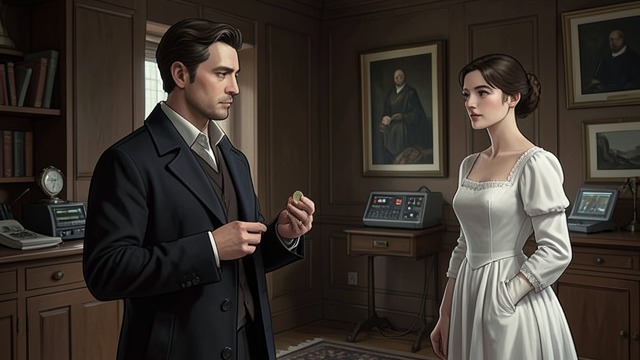
Edward Hutchins considers whether repeated misfortune at the Bramford could reflect social patterns or unknown physical forces. He does not insist on a supernatural explanation.
Skepticism Tested
Guy’s coin-flip analogy makes the warning sound irrational. The novel preserves the gap between evidence of a pattern and certainty about its cause.
Agnosticism at Dinner
Belief as Conversation
Religious Criticism
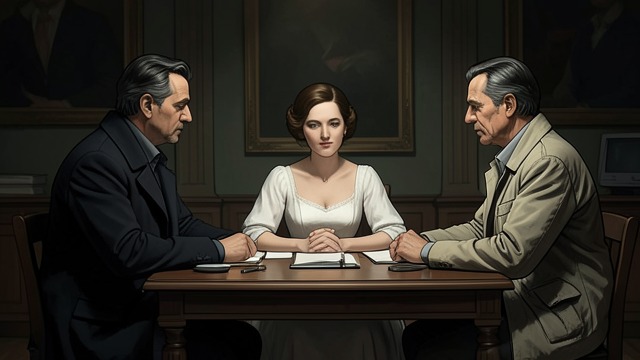
Roman calls religious ceremony a form of show business, and Guy agrees that absolute proof is unavailable. Rosemary says she is agnostic but still respects the Pope.
Conviction Hidden in Plain Sight
The conversation presents belief as a matter of identity and performance. The Castevets’ confidence in their own ritual system remains concealed behind mockery of ordinary religion.
The Book’s Evidence

Belief Becomes Practical
Witchcraft Read
Rosemary reads about covens, black candles, blood, and ritual practices. She understands that even if magic is unreal to her, believers may still act on it.
A Boundary Drawn
She decides that she will not allow the Castevets near the baby. Her fear rests less on proven supernatural power than on the danger of committed people acting upon a belief.
The Doctor’s False Safety
Rational Authority Misused
A Credible Reassurance
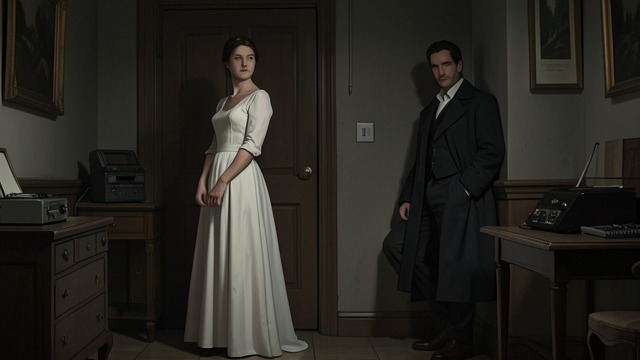
Abraham Sapirstein agrees that Roman is Adrian Marcato’s son but dismisses the implication. He offers Rosemary a medical explanation and promises that the Castevets will soon leave.
Skepticism Enlisted
Rosemary wants a reasonable account and accepts his plan. The doctor’s credibility becomes part of the mechanism that keeps her from acting sooner.
Belief Made Real
Ritual as Social Power
A Declared Faith
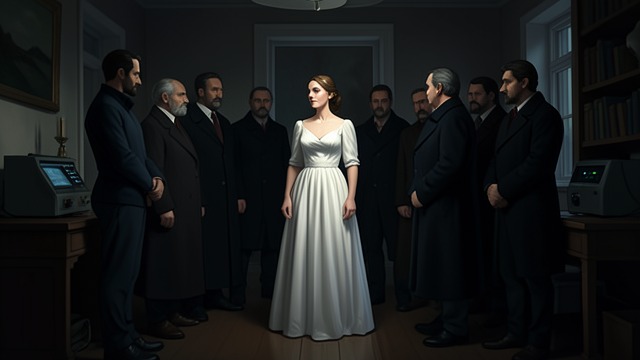
Roman and the group identify Andrew as Satan’s son and proclaim a new era. Whatever the reader believes about their supernatural claims, their control over Rosemary and the child is tangible.
Unresolved Knowledge
Rosemary cannot disprove their theology, but she can respond to the harm before her. The story makes practical resistance more urgent than certainty about metaphysics.
August, during the lease discussion
September, at the Castevets’ table
June, after Hutch’s memorial
June, after Rosemary tells Sapirstein her fears
June 25, during the coven’s celebration
